
At a glance
- Location
- Ikšķile
- Service
- Rodent control — rat and mouse extermination
- Price
- From €40 — the figure quoted is the final price
- Availability
- 24/7, weekends and nights included
- Getting there
- We travel from Riga; arrival time agreed per address
- How to book
- Enquiry form only — we reply within 5 minutes
Rodent control in Ikšķile — a small town of detached houses
Ikšķile is a small town in Ogre district on the bank of the Daugava, dominated by detached houses, newer residential neighbourhoods, a few apartment buildings and a historic centre. So rodent control in Ikšķile mostly means work around the house rather than only inside it. We start the inspection from the perimeter: we walk the foundations, check the ventilation hatches, the gaps at thresholds, the service entries, the outbuildings, the woodpile and the compost, and record droppings, burrow entrances and greasy rub marks. Only then do we plan the bait stations and the control points. The distance to Riga is roughly 30 km and to Ogre 7.4 km, and we agree the arrival time separately for each address. Emergency callouts are available round the clock, and we reply to a completed form within 5 minutes.
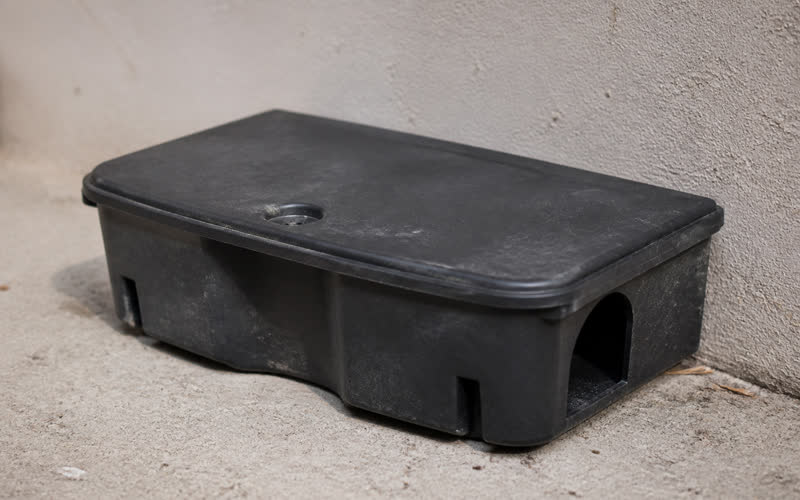
Perimeter, garden and outbuildings: where the problem actually starts
In a private house rodents rarely start out living in the kitchen — they come in from outside when it turns cold or the food runs out. On the plots of Ikšķile's detached houses the most persistent nesting points are the compost heap, the woodpile, the greenhouse, the shed, the garden house and the fallen fruit under the trees. That is where the population overwinters, and from there it moves each autumn into the heated house. In practice that means perimeter protection with a line of external bait stations along the foundations and the outbuildings achieves more than baiting indoors. The woodpile should be kept on pallets and away from the wall, the compost in a closed bin. Inspecting and treating a private house costs €90–110, with a minimum callout charge of €40; the price is affected by the size of the plot, the number of outbuildings and access to the basement or the loft.
The Daugava banks and the reservoir strip: the brown rat's natural habitat
Ikšķile lies on the Daugava, and the nearby reservoir with its flood-prone shoreline strips determines which rodent is dominant here. The brown rat is a semi-aquatic animal: bank slopes, the edges of reed beds, boat moorings and ditch systems give it water, cover and soft ground for burrows. A rise in the water level in spring or after prolonged rain floods the burrows and pushes rats up into the higher-lying buildings — and that is exactly when traces suddenly appear in a basement or under decking at houses near the bank. A burrow entrance 5–8 cm across by the foundations, under the deck boards or at the edge of a ditch is a sure sign that the animals have settled in rather than merely passing through. In such cases bait stations alone, without sealing the routes in, will not solve the problem.
Forests around the town: the field mouse and the house mouse in autumn
There are extensive wooded areas around Ikšķile, and that means a regular autumn wave. From September to November field mice and woodland rodents lose their food and cover and head for warm buildings; at the same time the house mouse is looking for a permanent nesting site. Unlike rats, mice are not wary of anything new and will approach a bait station almost immediately, so the result shows sooner — but only if the entrances are sealed. A house mouse squeezes through a 6–7 mm gap, so openings in the loft fascia, roof overhangs, ventilation grilles and old window reveals matter just as much as the foundation level. Mouse extermination and sealing done in good time in August or September costs less than the work needed once mice are already nesting in the insulation.
Newer development: unsealed service entries as the commonest way in
New residential neighbourhoods have been built in Ikšķile over recent years, and there the problem is not wear and tear but construction detail. Water, sewer, electricity and heat pump pipe entries through the foundations are often filled with expanding foam, and to rodents that is no obstacle — the foam is gnawed out in a few nights and the hole stays just as big, only hidden. The lower edges of ventilated façades, unsealed roof overhangs and access under decking are equally problematic. Only metal mesh with a 5 mm aperture together with cement mortar holds. We seal entry points after the inspection, once it is known which entries are actually in use — that is shown by greasy rub marks 5–10 cm above the floor or the top of the foundation.
When the house is empty by day: signs noticed only in the evening
Ikšķile is largely a commuter town for Riga — many residents are away during the day, and that changes how the problem gets noticed. Rodents work more freely in an empty house, and the first signs are usually spotted in the evening or at night: scratching in the partitions, footfalls at ceiling level, movement in the basement. By that point a population has often already established itself. So it matters to read the quiet signs: mouse droppings are 3–6 mm long and scattered across shelves and behind appliances, rat droppings 15–20 mm and concentrated along walls and runs. A brown rat squeezes through a 20 mm opening. If you are seeing the signs, fill in the form with the address and a description and we will arrange an inspection at a time that suits you, evenings included.
What rodent control in Ikšķile covers
Rodent control in Ikšķile means a full cycle, not a single treatment. Rat extermination and mouse extermination start with an inspection: we identify the species, find the runs and the entry points, and only then choose the method. Rodent control involves placing tamper-resistant bait stations or mechanical traps on the actual runs, checking them again, and giving specific advice on what needs sealing so the problem does not come back. The price depends on the type of property and its floor area: treatment starts at €40, and the figure quoted is the final price. Describe the property in the form — we reply within 5 minutes.
Frequently asked questions
Is treating the interior enough in a private house?
In Ikšķile it rarely is. Rodents come in from outside — from the compost, the woodpile, the shed or the shoreline strip — so treating indoors removes the consequence but not the source. A durable result comes from perimeter protection with a line of external bait stations, tidying up the outbuildings, and sealing gaps at foundation level with metal mesh and cement mortar, because otherwise new animals come in by the same route.
Why do rats appear in the basement after heavy rain?
Near the Daugava and the reservoir, a rising water level floods the bank burrows and the brown rat moves up into the higher-lying buildings. It is a seasonal phenomenon, not a chance one. The answer is to check the basement window reveals, the floor gullies and the service entries, seal them, and set bait stations around the perimeter on the riverbank side, where the main pressure comes from.
How much does rodent control cost for a private house in Ikšķile?
Inspecting and treating a private house costs €90–110, treating a flat €40–80, the minimum callout charge is €40, and commercial premises start from €70. The final figure is set by the size of the plot and the building, the number of outbuildings, access to the basement and the loft, and whether sealing entry points is needed. Fill in the form with the address and a description of the situation.
Is expanding foam any good for filling holes?
No. Rodents gnaw expanding foam out in a few nights, and the entrance stays open, just no longer visible. What works is metal mesh with a 5 mm aperture, set into the opening and covered with cement mortar. That solution holds, because a house mouse needs a gap of at least 6–7 mm and a brown rat a 20 mm opening.