
At a glance
- Location
- Jūrmala
- Service
- Rodent control — rat and mouse extermination
- Price
- From €40 — the figure quoted is the final price
- Availability
- 24/7, weekends and nights included
- Getting there
- We travel from Riga; arrival time agreed per address
- How to book
- Enquiry form only — we reply within 5 minutes
Rodent control in Jūrmala: what a resort town brings with it
Jūrmala is a city in its own right stretched in a long strip from Lielupe to Ķemeri, and it is not one compact settlement. Rodent control in Jūrmala means entirely different properties: a historic timber house, a block of flats, a hotel or a rehabilitation centre. Each has its own perimeter, its own crawl space and its own routes for rodents to get in. We work in Jūrmala from Riga along the A10 and by rail, so access is agreed by address — a trip to Lielupe and one to Ķemeri are not the same thing. An inspection always starts with what is happening around the building and beneath it, not with what can be seen in the rooms. A resort and the fact that people live there year-round in one town mean that an occupied block can sit next door to a property empty for months, and rodents move between them freely.
Seasonally used properties: the problem shows up when the season opens
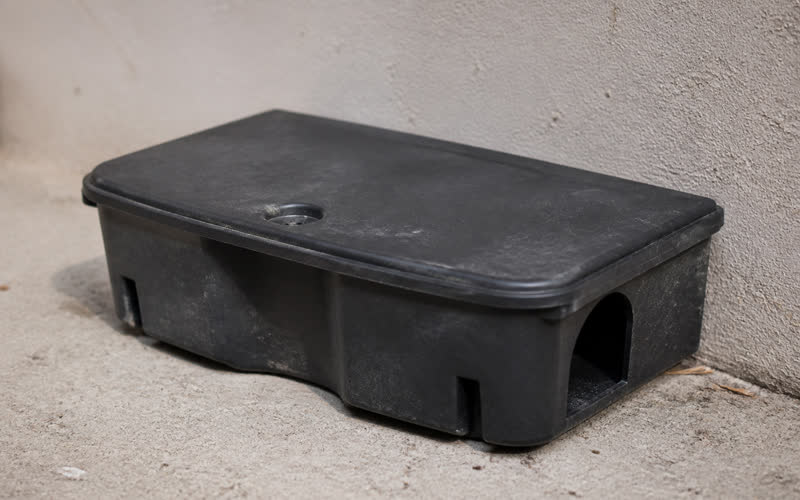
Seasonally used properties are Jūrmala's defining feature and, at the same time, the main challenge for rodent control. A house shut up from October to May is an ideal nesting site: no footsteps, no vibration, no light. The owner sees the result when the season opens — chewed mattresses and textiles, insulation pulled apart, house mouse droppings 3–6 mm long in the cupboards. If the droppings found are 15–20 mm, this is no longer a mouse but a brown rat. There are two logical moments for service: an inspection before the season opens and sealing before winter, when bait stations and control points are placed so that they work unattended in an empty house. Before closing up we also check what is left inside: food remains, seeds and paper draw rodents into an unvisited building.
Historic timber buildings and the crawl space
Jūrmala's timber architecture is beautiful and convenient for rodents. Timber buildings almost always have a ventilated crawl space, floors with voids, and board joints dried out over decades. A house mouse gets through a 6–7 mm gap and a rat needs only 20 mm — in practice nearly every external joint in an old timber house is a potential entry. Expanding foam does not work here — a rodent chews through it in a few nights. What does work is metal mesh with a 5 mm aperture together with cement mortar; that is how we seal entry points. In heritage buildings invasive solutions are limited, so we shift the work to ventilation openings, crawl space hatches and service entries, where the fix is reversible. In the crawl space we also check the insulation — mineral wool pulled apart between the joists is a sure sign of a nest.
Sandy ground, pine woods and the sea wind
The sandy coastal ground is easy to dig, and the brown rat makes use of it: a burrow entrance 5–8 cm across at the foundations, under a deck or by a compost bin is a typical find when inspecting private houses. In sand a burrow system forms quickly, and the spoil is indistinguishable from its surroundings. The nearby pine woods add a second group — the field mouse comes in from the woodland edge in autumn looking for warm, hollow structures. The sea wind and drifting sand expose joints in the foundations and block ventilation grilles. Inspecting the perimeter, we record burrow entrances, runs worn into the sand, and grease marks 5–10 cm above the floor that point to a regularly used route. Those signs tell us where bait stations will actually work, and where they would be left untouched.
Hotels, guest houses and rehabilitation centres
Hospitality, health and rehabilitation services are the backbone of Jūrmala's economy, and on these sites rodent control is also a matter of reputation. We plan the work discreetly and outside the busiest hours, agreeing it with the building manager: kitchens, bin rooms, laundry areas and service corridors are inspected when guest traffic is at its lowest. In guest areas the bait stations are tamper-resistant and fixed down, with a clear plan of the control points so that staff know where they are. The brown rat is neophobic — it avoids a new object for 3–7 days, so a repeat check is part of the process. Technical faults — damaged door seals, open cable risers, blocked ventilation grilles — we record in writing so the building manager can plan the repairs. On commercial properties rodent control starts from €70.
How the work is done and what it costs
The work starts with an inspection: perimeter, crawl space, plant rooms, service entries and loft. From the size of the droppings, the gnawing and the burrow entrances we determine whether the property has a house mouse, a field mouse or a brown rat. We then place bait stations and control points along the routes actually in use rather than evenly around the room, and agree a repeat check. Rat extermination and mouse extermination without sealing entry points are short-lived, so we record structural faults in writing on the first visit. The minimum callout is €40, flats €40–80, private houses €90–110, commercial properties from €70. We work around the clock, emergency callouts included, and on seasonal properties we fit the working time around when the owner is there. If the property is let out, the repeat check is usually planned between guests.
Service area and how to get in touch
We cover Jūrmala from Riga — we have no office in the town itself, and that does not affect the quality of the work, as the distance along the A10 is short. We also work in Riga (20.4 km), Babīte (11.3 km), Mārupe (18.8 km) and Tukums (37.3 km), so neighbouring properties can often be arranged on the same day. The long, polycentric layout means we confirm the arrival time by district. If you have found gnawing or droppings when opening up for the season, or you can hear movement in the partitions, fill in the form with the address, the building type, how it is used and a short description of what you found — we reply within 5 minutes and offer the earliest inspection slot. Photos help too: the size of the droppings next to a familiar object often makes it possible to say in advance whether the property has a house mouse or a brown rat.
Frequently asked questions
How do I tell whether the house has mice or rats?
By the droppings and the openings. For the house mouse they are 3–6 mm long, for the brown rat 15–20 mm. A mouse gets through a 6–7 mm gap, a rat needs around 20 mm. Outside, a rat gives itself away by a burrow entrance 5–8 cm across, while grease marks 5–10 cm above the floor point to a frequently used route.
The summer house stands empty in winter — is rodent control even possible?
Yes, and an empty property is exactly the one that needs the most attention. An undisturbed house is an ideal nesting site, and the damage is discovered when the season opens. We work at two points: an inspection before the season and sealing before winter, placing bait stations and control points so that they work unattended.
Can the gaps in an old timber house be filled with expanding foam?
No. A rodent chews expanding foam through in a few nights. What works is metal mesh with a 5 mm aperture together with cement mortar. In timber buildings we concentrate on crawl space hatches, ventilation openings and service entries, because invasive solutions are not acceptable in heritage buildings.
How much does rodent control in Jūrmala cost, and how soon can you come?
The minimum callout is €40, flats €40–80, private houses €90–110, commercial properties from €70. The price depends on the floor area and the entry points. We work 24/7 and take emergency callouts; the time is agreed by address. Fill in the form — we reply within 5 minutes.