
At a glance
- Location
- Grīziņkalns
- Service
- Rodent control — rat and mouse extermination
- Price
- From €40 — the figure quoted is the final price
- Availability
- 24/7, weekends and nights included
- Getting there
- We travel from Riga; arrival time agreed per address
- How to book
- Enquiry form only — we reply within 5 minutes
Rodent control in Grīziņkalns: dense pre-war building stock
Grīziņkalns is a historic, densely built neighbourhood east of the centre, where early twentieth-century tenement blocks stand close together and often share walls. That is the main practical feature shaping the work: a rodent problem here rarely belongs to one building. If one block has an active population, the neighbouring block receives it through the shared structure, the yard or the old drainage connections. Rodent control in Grīziņkalns therefore starts with an assessment of the whole building — and often of the immediate neighbours — rather than of a single flat. During the inspection we always check the basement, the stairwell and the yard, because that is where the real direction of movement shows. A sign noticed in a flat is usually only the end of the route, not its start, and there is no point building a plan on that alone.
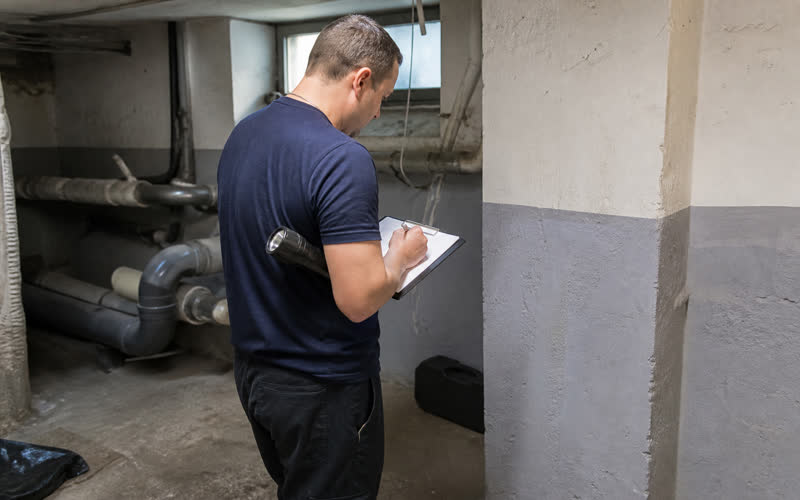
Shared walls and structures: why the problem moves next door
In pre-war blocks the partition walls have voids, the floors between storeys are timber, and vertical service runs connect the floors. The house mouse moves through these structures around the clock, which is exactly why the noise is often heard where there is no nest. If two buildings share a wall or have connected basements, treating only one side gives a brief result — the population moves across and comes back a few weeks later. In practice we handle that by placing control points on both sides of the shared structure and at the points where the basements connect. The size of the droppings shows straight away what we are dealing with: house mouse droppings are 3–6 mm long, brown rat 15–20 mm, and both the layout of the stations and the priority given to gaps follow from that. In such buildings the ventilation shaft not uncommonly links neighbouring wings as well, so we check its outlets separately.
Small inner courtyards and the bin area under the windows
In the blocks of Grīziņkalns the inner courtyards are small and enclosed, and the containers in them often stand a few metres from residential windows and basement lights. A waste area in a yard like that is both a food source and a shelter at once: cardboard and bags pile up behind the containers, and that is where the brown rat sets up a permanent home. Along the edge of the foundations we look for burrow entrances — holes in the ground 5–8 cm across, usually against the wall or under the container platform. Bait stations go between the waste area and the building entrances, but in the long run what decides the outcome is how the containers are managed: lids closed and collections frequent enough. Without that, bait stations only hold the numbers down while the environment stays exactly as attractive as before. We recommend addressing this together with the building manager, since the yard is usually shared property.
Old sewer stacks as the classic way in
Buildings in this neighbourhood still have working sections of ceramic and cast-iron drainage that have crumbled at the joints and inspection covers over the decades. The sewer stack is the most typical route by which a rat reaches a kitchen or a bathroom, and the signs are characteristic — noise at night in the bathroom, damp rub marks at the base of the pipe, droppings under the sink. During the basement inspection we follow the walls looking for grease marks 5–10 cm above the floor along the pipework. Damaged sections have to be repaired by a plumber — this is not a job that can be filled in. Until the repair, we place control points in the basement and at the stack entries to intercept movement before the residential floors. In the flat we also check around the sink and bath traps, and the holes between floors alongside the pipework.
Sealing entry points in a dense block
In dense building stock there are many entry points, so we seal them in order of priority: first the basement windows and the gaps under doors, then the pipe entries through the foundations, then the ventilation shaft outlets and the stairwell openings. A house mouse needs only 6–7 mm and a rat 20 mm, so even a small crack in the brickwork beside a pipe is a fully usable entrance. Expanding foam does not work — it is gnawed through in a few nights; what works is metal mesh of 5 mm aperture combined with cement mortar. Without this step, both rat extermination and mouse extermination in a building with shared structures repeat every season. We note down every place that has been closed, so that next time it is clear what has already been done and what is still open.
Treating a building in stages, and what it costs
Rodent control in a flat in Grīziņkalns is often ordered on its own, but a lasting result only comes when the basement and the yard are treated at the same time. If several flat owners or the building manager agree on work for the whole building, control points can be laid out systematically and a written record of the work carried out makes it possible to follow activity over time. Expect the brown rat to be wary of anything new — for the first 3–7 days it may not go near the stations, and that is not a sign of failure but predictable behaviour. Treating a flat costs €40–80, treating a private house €90–110, commercial prices start from €70, and the minimum callout charge is €40. We work 24/7, including emergency callouts. Fill in the form, stating the type of building and whether there is access to the basement — we reply within 5 minutes.
What rodent control in Grīziņkalns includes
Rodent control in Grīziņkalns means a full cycle, not a single treatment. Rat extermination and mouse extermination start with an inspection: we identify the species, find the movement routes and the entry points, and only then choose the method. Rodent control involves placing tamper-resistant bait stations or mechanical traps on the runs that are actually used, rechecking them, and giving specific advice on what needs sealing so the problem does not come back. The price depends on the type and size of the property: treatment starts at €40, and the figure quoted is the final price. Describe the property in the form — we reply within 5 minutes.
Frequently asked questions
The building next door has rats. Will they come to us?
Very likely. In dense pre-war stock, buildings share a yard, sometimes a wall and almost always the old drainage connections, so the population moves between addresses. In that situation we close the ways into your building and place control points around the perimeter of the yard, to intercept movement from the neighbouring side before it reaches the basement and the stairwell.
There is noise in the bathroom at night. What does that mean?
Most often it points to the old sewer stack. Crumbled joints or a damaged inspection cover in the basement let a rat climb up the pipe. We inspect the run of the stack in the basement and at the entries; the damaged places have to be repaired by a plumber, but we place control points immediately so that upward movement is limited even before the repair is done.
The bins stand under the window. Can anything be done about that?
Moving the containers altogether in a small yard is usually impossible, but the routine can change: lids closed, more frequent collections, no cardboard left beside them. We place bait stations around the waste area and close off the nearest basement windows. It is worth raising this with the building manager, as the state of the yard affects the result for the whole building.
Is it enough to treat only my flat?
It will reduce activity for a while, but in a building with shared structures and a basement the problem will return. The recommended order is the basement, the yard, and only then the flats, because rodents live below rather than in the living space itself. If several owners in the building agree, the cost per flat works out lower than repeated separate callouts.