
At a glance
- Location
- Purvciems
- Service
- Rodent control — rat and mouse extermination
- Price
- From €40 — the figure quoted is the final price
- Availability
- 24/7, weekends and nights included
- Getting there
- We travel from Riga; arrival time agreed per address
- How to book
- Enquiry form only — we reply within 5 minutes
Rodent control in Purvciems: a question of scale, not of one flat
Purvciems is one of the largest residential estates in Riga, and the way it is built determines everything else. A Soviet-era apartment block here is not one small building but a long one with several sections and a basement running the whole length of the house. In practice that means something simple: if you treat only the section where the resident complained while the neighbouring part of the basement is left untouched, the colony carries on feeding and breeding a few dozen metres away. Two weeks later the noises are back — just in a different stairwell. Rodent control in Purvciems therefore starts with an inspection of the whole building's basement, not of one address. During the inspection we look at droppings, grease marks on the walls, gnawing and entry holes, and only then plan the layout of the control points. Here, scale is a practical constraint on the work, not a selling point.
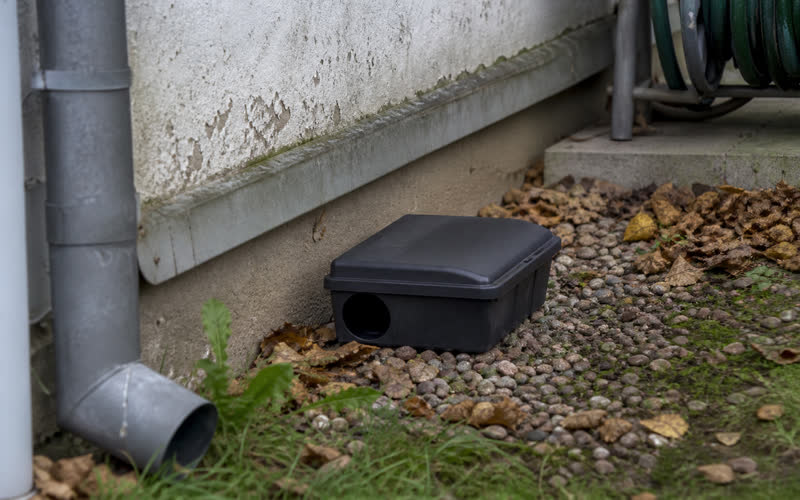
The long basement: why one untreated section feeds the whole building
The basements of the Purvciems blocks are connected — there are service openings, pipe runs and old process apertures in the partition walls through which the brown rat moves freely. The heating substation is usually at one end of the basement, and heat and damp concentrate around it, so nesting happens there while feeding happens at the complete opposite end of the building, by the outlet of the refuse chute. If that distance is not understood, the bait stations go in the wrong place and nothing is taken. Rat extermination in a large Soviet-era apartment block rests on a chain of points along the whole length of the basement: at each heating substation, at the bases of the sewer stacks, at the external ventilation openings and along the walls where marks are visible 5–10 cm above the floor. Rats show neophobia for 3–7 days — they avoid anything new, so an empty station at the first check still means nothing.
Inner courtyards and bin areas as a permanent food source
The Purvciems layout is characterised by wide inner courtyards between the buildings, and the waste container areas are almost always right there — a few metres from the plinth of the building. That is a permanent food base, replenished every day. If the container lids do not close, if bags are left beside the area, or if there are washed-out voids under its surfacing, the rat population stays there regardless of how thoroughly the basement has been treated. A practical set of signs we look for around the area: burrow entrances 5–8 cm across in the ground or under the kerb, trodden runs across the grass and droppings 15–20 mm long. Rodent control in Purvciems is therefore almost always in two layers — the basement plus an outer ring of control points around the bin area, agreed with the building manager.
Access and parking: how a technician's work fits into the day
Deglava, Dzelzava and Stirnu streets are busy through-routes, and getting into the inner courtyards often means narrow accesses that are occupied during the day. This is not a detail: treating a large building means carrying equipment and materials to several stairwell entrances, and if the kit has to be left a hundred metres away, the work becomes fragmented. The second question is basement keys — the sections tend to have different ones, held by different people. So when you fill in the form, state straight away who opens the basement and whether all the sections are accessible. Public transport in Purvciems is extensive, so inspections without a vehicle are entirely realistic if the property is a single flat. Emergency callouts are available 24/7, and we reply to a request within 5 minutes.
Rodent control in a flat: what the resident can do
While the building manager arranges the shared-property part, there is work inside the flat that can be done straight away. In a Soviet-era apartment block the main entry points are under the sink — where the waste pipe enters the wall — behind the bath, the ventilation shaft grilles in the kitchen and bathroom, and the gap between the skirting board and the wall in the corners. A house mouse gets through a 6–7 mm gap and a rat needs 20 mm. Expanding foam does not work here — it is gnawed out in a few nights. What works is metal mesh of 5 mm aperture, bedded in cement mortar. If the droppings are 3–6 mm long, you are dealing with a mouse rather than a rat, and the plan of action is different. Rodent control in a flat: one room — €40, two rooms — €55, three rooms — €70, four rooms — €80. Minimum callout €40.
Commercial premises and offices among the residential blocks
In Purvciems there are retail and office premises between the residential blocks, and they often share a single services duct with the buildings' basements. The wall of a shop's store room can be the same wall behind which the residential basement begins. Treat only one side and the rodents move to the other, returning once the pressure eases. At commercial sites we work with a numbered control point system: fixed positions, a record of consumption and of the gaps found at each inspection, and separate attention to the goods intake area and the waste collection point. Mouse extermination in offices usually starts from the kitchen corner and the cable entries of the server room. Treatment of commercial premises from €70, with the exact scope depending on the area and the number of points. Submit your request through the form.
Frequently asked questions
Why treat the whole basement if the rats can only be heard in one stairwell?
In the Soviet-era blocks of Purvciems the basement is continuous along the whole length of the building, and there are service openings in the partition walls. The rodents nest by the heating substation but feed at the other end of the building. Treat one section and the colony simply moves — and after a couple of weeks the noises turn up in the next stairwell.
Will rodent control in a flat help if the basement is not treated?
It will help only in part. In the flat you seal the entry points — the ventilation shaft grilles, the pipe entries, the gaps around the sewer stack — and that stops entry into that particular home. But the source remains in the basement or at the bin area, so you also need to go to the building manager about the shared-property part.
How do I tell whether there is a mouse or a rat in the flat?
By the droppings. House mouse droppings are 3–6 mm long, brown rat 15–20 mm. The second sign is the gap it came in through: a mouse needs only 6–7 mm, a rat about 20 mm. On walls 5–10 cm above the floor, rats leave grease marks.
How long does it take to see a result after bait stations are placed?
The brown rat avoids new objects in its territory for 3–7 days — that is neophobia. An empty station at the first check therefore does not mean the work has failed. We assess consumption at the repeat inspection and adjust the layout of the points in the basement accordingly.