
At a glance
- Service
- Rodent control in an office
- Area covered
- Riga and the surrounding region
- Price
- From €40 — the figure quoted is the final price
- Availability
- 24/7, weekends and nights included
- Reply time
- Within 5 minutes of the form being submitted
- How to book
- Through the enquiry form only
Rodents are not usually expected in an office — until somebody notices droppings in the kitchen cupboard or hears a noise above the suspended ceiling.
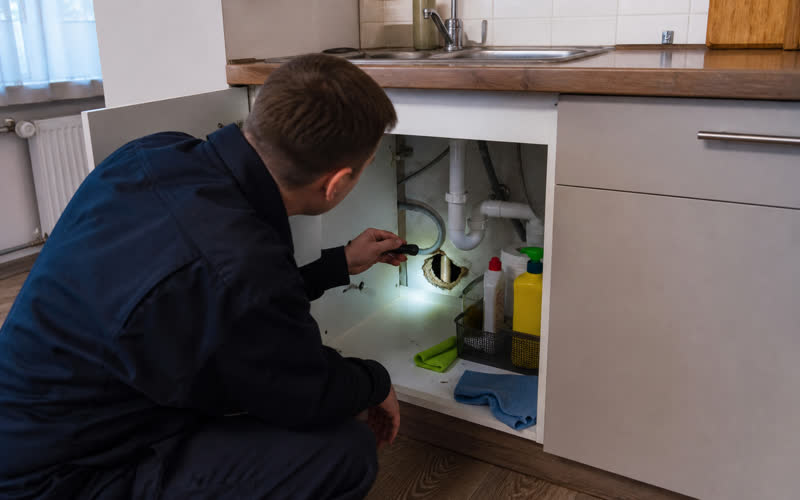
The kitchen corner
The office kitchen is the only constant food source. Waste left out overnight and packets of biscuits in drawers keep a population going.
Suspended ceilings and cable trunking
These spaces are empty, warm and never inspected. Rodents move between rooms up there and gnaw data cables.
Treatment without disrupting work
We work outside office hours or in zones with no staff present. We place the stations in service rooms and behind equipment.
The server room and the risk of cable damage
In an office, rodents most often create a technical problem rather than a hygiene one. The server and comms room is the warmest place on the floor, the temperature is steady around the clock, it is quiet, and it holds bundles of cable that serve a rodent both as a route and as material for wearing its teeth down. Gnawed insulation on a patch cable means an unstable network segment that takes days to trace; a damaged power lead can cause a short circuit in the cabinet. When inspecting a room like this we check the floor entries under the server cabinets, the recesses of the raised floor, the gaps at cable entries in the wall and the ventilation openings. The solution is a combined one: passive monitoring points along the wall lines, since we do not work with active products near equipment, and the sealing of every entry with metal mesh or a sealing material a rodent cannot gnaw through.
Desk drawers and food in the open-plan area
In an open-plan office there are far more food sources than it seems. Packets of biscuits in a drawer, nuts and dry snacks on a shelf, sweets on a desk, crumbs under a keyboard and in the joints between desks — each of these points sustains a small but constant food base exactly where nobody is at night. Mice navigate well by smell and can get into a drawer via the back of the desk structure. The practical solution is simple and requires no investment at all: keep food only in the kitchen area and only in hard containers with a tight lid, leave no open packets in drawers, and agree that desk surfaces are clear at the end of the day. If we find droppings at the workstations themselves during an inspection, that is almost always a sign that food is being kept at the desks, not that the nest is right there.
Shared kitchen waste left overnight
The office kitchen bin is one of the strongest food sources on the whole floor, and it is almost always left full until the next day. Coffee grounds, fruit peel, half-eaten lunches in plastic containers and sweet drink bottles produce a concentrated smell that spreads through the whole quiet space at night. If the bin has no lid, or a pedal lid that no longer closes, it is an open table for a rodent. In practice we recommend three things: a bin with a tightly closing lid, emptying it every evening before locking up rather than in the morning, and clearing food residues out of the dishwasher or the sink. It is also worth checking the sink trap and the floor joint under the kitchen units — that is often where the route into the floor void begins.
How to inspect a suspended ceiling
A suspended ceiling is an enclosed, warm and completely undisturbed space in which rodents move freely along cable runs and the surfaces of ventilation ducts. When inspecting it, we do not lift every panel in turn — that is pointless and damages the finish. Specific points need checking: panels by ventilation duct outlets, by vertical shafts, above the kitchen area, above the server room, and any beneath which crumbs of insulation or dust have been noticed on the floor or a desk surface. Droppings and grease marks along the travel routes show up well on the metal supporting grid and on the surface of the tiles. If evidence is found, monitoring points go in within the ceiling void itself along the identified route, and at the repeat visit we can see whether the movement is continuing and in which direction.
Multi-tenant buildings where the source is on another floor
In an office centre your premises are only one part of the building. If there is a café, a canteen or a food shop on a lower floor and a shared waste room in the basement, the pressure practically always comes from there, and rodents reach the upper floors along the vertical service shafts within a few days. Treating only one office in that situation means fighting the symptoms. So during an inspection we always establish what is below and alongside, and whether the building manager already carries out monitoring in the communal areas. If they do, your work is coordinated with it; if they do not, it is worth starting a conversation with the manager about the basement, the waste room and the shafts in parallel. Without a building-level solution, the result in a single office usually holds for a few months, no longer.
What the building manager coordinates
For treatment in an office to go ahead without disruption, a few things have to be arranged in advance, and they usually fall to the building manager or the office manager. First, access to the service rooms — the server room, the ventilation plant room, the electrical intake room and the basement services corridor — because that is where the most critical points are. Second, the time window: most of the work we do after the end of the working day or at the weekend, and that has to be agreed with security and pass control. Third, communication: staff need to know that numbered points have been placed in the premises and must not be moved or thrown out during cleaning. Fourth, briefing the cleaning staff about emptying the waste in the evening. For commercial premises the price starts from €70, and we calculate the final sum according to the floor area and the type of property. Fill in the form and we reply within 5 minutes.
Frequently asked questions
Do staff have to leave the office?
No.
Is the treatment safe for equipment?
Yes, it has no effect on equipment.
How long does it take?
Usually up to a couple of hours, depending on the floor area.
Can rodents damage office network and electrical wiring?
Yes, that is the main risk in an office. Cable insulation serves for wearing teeth down, so gnawed leads in the server room or in cable trunking cause an unstable network and a risk of short circuit. Near equipment we work with monitoring points and the sealing of entries rather than active products.
How do you inspect a suspended ceiling without damaging the finish?
We do not open everything — only targeted panels: by ventilation outlets, vertical shafts, above the kitchen and the server room, and wherever crumbs of insulation have appeared on the floor. Droppings and grease marks along the route show up well on the metal grid.
What should we do if the source is on another floor of the building?
In a multi-tenant building the pressure often comes from a catering unit on a lower floor or the basement waste room, and the rodents travel along the vertical shafts. Treating a single office then gives a short-lived result — the solution has to be coordinated with the building manager for the communal areas.