
At a glance
- Location
- Jelgava
- Service
- Rodent control — rat and mouse extermination
- Price
- From €40 — the figure quoted is the final price
- Availability
- 24/7, weekends and nights included
- Getting there
- We travel from Riga; arrival time agreed per address
- How to book
- Enquiry form only — we reply within 5 minutes
Rodent control in Jelgava — how we work in the city in Zemgale
Jelgava is a compact city in Zemgale with a historic centre, districts of flats, areas of detached houses, and university and industrial premises. Rodent control here starts with an inspection: we walk the perimeter, the basement, the heating substation, the sewer stack shafts and the bin area, and record entry holes, droppings and grease marks. Only then do we plan the bait stations and control points. Jelgava is roughly 40 km from Riga, so the arrival time is agreed for each address — emergency callouts are available around the clock, and we reply to the form within 5 minutes. Fill in the form with the address and a short description of the situation, and we will tell you what the most realistic plan of action is for that particular property and how many checks it will need. Besides Jelgava we also cover the nearest surroundings: Olaine, Iecava, Baloži and Riga.
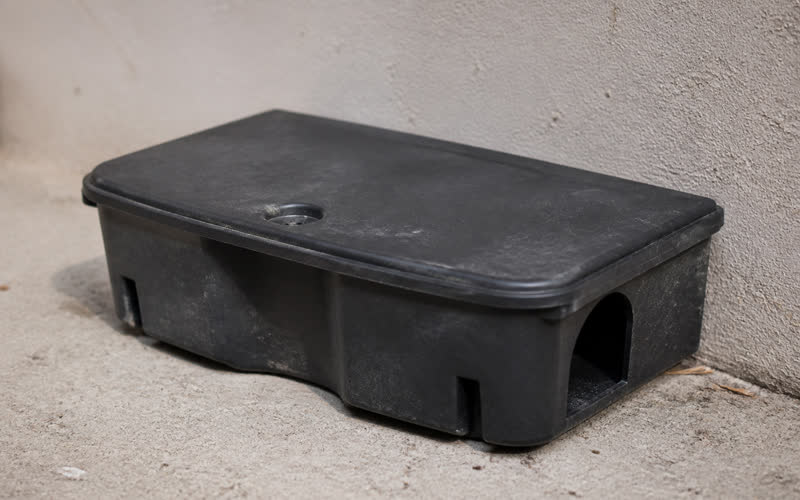
Farming country around the city: why the perimeter matters more in Jelgava than in the centre
The Zemgale plain is farmland, and that governs the seasonality of rodents in Jelgava. After the harvest, from August to October, the field mouse loses its food and its cover in the fields and moves in numbers towards heated buildings. Grain stores, feed warehouses and farm buildings on the outskirts sustain a permanent population outside. So in Jelgava, more than elsewhere, perimeter protection achieves more than baiting indoors: an outer line of bait stations along the foundations intercepts the animals before they find a way in. In dense city blocks the main pressure comes from the sewers, but in Jelgava it comes from the fields. In practice that means a pre-season inspection in August costs less than emergency work in November, when the mice are already nesting in the partitions and floor structures. That is why we recommend a planned schedule rather than separate callouts for properties on the rural fringe.
The Lielupe and Driksa floodplains: damp basements and flooding
Sitting in the floodplains of the Lielupe and the Driksa means a high water table and damp basements in the older buildings. The brown rat seeks out damp — a basement with condensation or a flooded floor is an ideal environment for it. In floods, rats are driven out of their bankside burrows and out of the sewer collectors and move up to the higher floors through the sewer stack and heating substation shafts. In such cases bait stations in the basement do nothing on their own if the routes in have not been sealed. So we first check the stack connections, the floor gullies and the seals around every service opening. Burrow entrances 5–8 cm across at the foundations are a sure sign that rats have already settled beneath the building rather than merely passing by. In damp ground they are usually easy to spot from the ridge of freshly dug soil.
The university, halls of residence and industrial premises: a system of control points
Education, research and manufacturing in Jelgava create properties where rodent control cannot be a one-off job. In halls of residence with shared kitchens, in canteens and in the back rooms of production plants food is available at all times, so we work with a system of numbered control points: every bait station is labelled, marked on a plan, and the result of every check is written down. That produces a record of the work carried out and of the activity found at each point. In production plants the goods-in yard matters too — a house mouse most often arrives on pallets and packaging rather than through the door. Servicing commercial properties starts from €70, the exact figure depending on the floor area, the number of control points and how often we check. In autumn we schedule checks on such properties more frequently, because the pressure from outside increases. Fill in the form and we will prepare a proposal.
Mixed building stock: the centre, the flats and the detached houses
An address within Jelgava can mean entirely different conditions. Buildings in the historic centre often have stone foundations with cracks and timber floor structures through which rodents move without a sound. In districts of flats the problem is usually shared by the whole stairwell: if there are rats in the heating substation or the refuse chamber, treating one flat solves nothing. In areas of detached houses and on the mixed urban and rural fringe what matters most is the sheds, compost heaps, log stacks and garden buildings — that is where the population overwinters and from where it moves into the house. Treating flats costs €40–80, inspection and treatment of a private house €90–110, and the minimum callout charge is €40. The price is affected by the floor area, the number of storeys and access to the basement or loft. That is why the inspection comes before the price is confirmed, not after it.
How to tell which rodent is living in the building
We determine the species from signs that we read carefully. Mouse droppings are 3–6 mm long, scattered over shelves and behind appliances; rat droppings are 15–20 mm, along walls and runs. Grease marks appear 5–10 cm above the floor where the animal passes the same wall every night. A house mouse squeezes through a 6–7 mm gap and a brown rat through a 20 mm opening, so for sealing we work to a metal mesh aperture of 5 mm. Rats are characteristically neophobic: they avoid touching a new object for 3–7 days, so a first check with no result does not mean the bait station is in the wrong place. Mice show no such caution and approach straight away, which is why mouse extermination usually gives a visible result faster than rat extermination in the same building.
Sealing entry points: what holds and what does not
Rat extermination and mouse extermination without sealing entry points are work you will repeat. Expanding foam is no use for this — rodents chew it through in a few nights, and the hole stays just as big, only hidden. What works is metal mesh with a 5 mm aperture combined with cement mortar: the mesh is set into the opening, the mortar goes over the top, and the joint stands up to a rodent's teeth. In Jelgava the most common entries are foundation ventilation hatches, holes by the heating substation, gaps under thresholds in outbuildings and basement window reveals. Once the sealing is done, the outer line of bait stations remains as a permanent buffer against the pressure from the fields. That combination — inspection, sealing, perimeter protection and planned checks — gives a more durable result than any one-off treatment visit. Fill in the form and we will agree a time for the inspection in Jelgava.
Frequently asked questions
Why do mice appear so suddenly in Jelgava in autumn?
After the harvest the Zemgale fields are left without food, so from August to October the field mouse moves towards warm buildings. It is a seasonal migration from the surrounding area, not one house's problem. The most effective answer is an outer line of bait stations and sealing the entry points before the season.
After a flood or a high water level, should I expect rats?
In the Lielupe and Driksa floodplains a rising water level floods the bankside burrows and the sewers, and the brown rat moves upwards through the sewer stack and heating substation shafts. So we first check the stack connections, the floor gullies and the seals around service openings.
How much does rodent control in Jelgava cost?
The minimum callout charge is €40. Treating a flat costs €40–80, inspection and treatment of a private house €90–110, and for commercial properties the price starts from €70. The figure is set by the floor area, access to the basement and the number of control points needed. Fill in the form with the address and we will prepare a quotation.
How quickly can you get to Jelgava?
We work 24/7 and take emergency callouts, but Jelgava is roughly 40 km from Riga, so the arrival time is agreed separately for each address. We reply to a completed form within 5 minutes and give a realistic time window for that specific address straight away, rather than an abstract average promise.