
At a glance
- Location
- Olaine
- Service
- Rodent control — rat and mouse extermination
- Price
- From €40 — the figure quoted is the final price
- Availability
- 24/7, weekends and nights included
- Getting there
- We travel from Riga; arrival time agreed per address
- How to book
- Enquiry form only — we reply within 5 minutes
Rodent control in Olaine — in a planned industrial town the work starts with an inspection
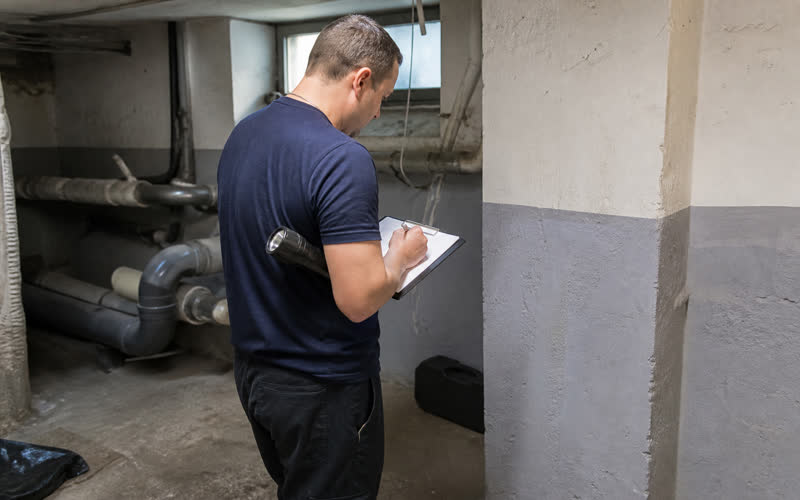
Olaine is a planned industrial and residential town, the centre of Olaine municipality, where production, warehouses and railway facilities sit a few hundred metres from apartment quarters. Rodent control in Olaine is therefore never a matter of one building alone: it starts with an inspection in which we walk the perimeter, the basement, the heating substation, the ventilation shafts and the waste yard, and record entry holes, droppings and greasy rub marks. Only then do we plan bait stations and control points. The distance to Riga is roughly 20 km, and the A8 gives quick access, but we still agree the arrival time separately for each address. Emergency callouts are available around the clock, and we reply to a completed form within 5 minutes. Fill in the form with the address and a short description of the situation.
Production and warehouse premises: numbered control points and a record of the work
Olaine's economy is dominated by manufacturing, logistics and warehousing, including chemical and pharmaceutical sites. In such premises a one-off treatment achieves nothing — food sources, packaging and the flow of goods are constant, so we work with a system of numbered control points. Each bait station is labelled and marked on the site plan, and the result of every check is written down, building up a written record of the work carried out for internal audits. In warehouses the most critical zone is not the office part but the goods-in yard and the pallet store: the house mouse most often comes in with pallets and cardboard packaging rather than through the door. High-bay racking creates hidden nesting points that access has to be planned for in advance. Servicing commercial premises starts from €70, with the figure depending on floor area, the number of control points and how often checks are made.
The Riga–Jelgava railway line and freight sidings as a rodent corridor
The Riga–Jelgava railway line runs through Olaine with freight sidings serving the industrial areas, and that is one of the most decisive factors in local rodent pressure. The embankment, the trackside verge and the ditches along the sidings form a continuous, undisturbed corridor along which the brown rat travels for kilometres, while at the same time freight brings rodents into a site from elsewhere. In practice that means a site beside the track never stays empty: even after a successful treatment the population is replenished from the corridor. Protecting the outer perimeter with a line of bait stations along the building foundations and along the site fence on the railway side is therefore more important here than baiting indoors. Burrow entrances 5–8 cm across on the embankment slope are a direct signal that a permanent nesting site is nearby.
Bogs, peat extraction and drainage: outside pressure every autumn
The area around Olaine is boggy and wooded, with peat extraction areas and an extensive network of drainage ditches. Drainage systems are exactly what the brown rat uses for travelling — the ditch bank gives cover, water and soft ground for burrows, and from there it moves towards the buildings. In autumn, as the temperature falls and the bog margins flood, the outside population starts pressing towards heated buildings; in the same period the field mouse comes in from the edge of the woods. Seasonality in Olaine is therefore pronounced: an inspection and sealing in August to October cost less than emergency work in November, when the animals are already nesting in partition walls. Perimeter protection here works as a permanent buffer zone rather than a one-off exercise, because the outside source never entirely disappears.
Apartment stock with shared basements, and areas of detached houses
Olaine's housing stock is planned: apartment quarters with shared basements and heating substations, with areas of detached houses alongside. That difference determines the scope of the work. In an apartment building the problem is almost always shared by the whole stairwell or even the whole block: if rats are in the heating substation, the basement compartments or the refuse chamber, treating one flat solves nothing, because the animals move along the sewer stack and the ventilation shafts. In the detached-house part what matter most are sheds, woodpiles, compost heaps and garden buildings — that is where the population overwinters. Treating flats costs €40–80, inspecting and treating a private house €90–110, and the minimum callout charge is €40. The price is affected by floor area, the number of storeys and access to the basement or the loft. In planned development the building solutions repeat, so the entry points found in one quarter usually apply to the neighbouring houses as well.
Sealing the entry points, in industrial and residential buildings: what lasts
Rat extermination and mouse extermination without sealing entry points is work that has to be repeated. Expanding foam is no use for this task — rodents gnaw through it in a few nights, and the hole stays just as big, only hidden. What lasts is metal mesh with a 5 mm aperture together with cement mortar: the mesh is set into the opening and the mortar applied over it. The arithmetic is simple — a house mouse squeezes through a 6–7 mm gap and a brown rat through a 20 mm opening, so nothing larger can be left open. In Olaine the most common ways in are gaps at warehouse door thresholds, cable and pipe entries in production buildings, foundation air bricks and service holes in the heating substations of apartment buildings. Once the sealing is done, the outer line of bait stations remains as permanent protection against pressure from the railway and the bogs.
Frequently asked questions
Why do rodents come back to a warehouse after treatment?
Warehouses in Olaine are usually near the railway and its sidings, and that corridor supplies new animals continuously. If internal treatment is not backed up by perimeter protection and by sealing door thresholds, cable entries and air bricks, the population recovers. The solution is a permanent system of control points with regular checks rather than separate treatment visits.
Can the problem be solved in one flat if there are rats in the building?
Usually not. In Olaine's apartment buildings with a shared basement and heating substation, rats move between flats along the stack and the ventilation shafts. If only one flat is treated, the animals move to the adjoining spaces and return. What produces a result is an inspection of the whole building, bait stations in the basement and the heating substation, and sealing the shaft entries with metal mesh and cement mortar.
How do you tell whether a building has mice or rats?
By the droppings and the tracks. Mouse droppings are 3–6 mm long and scattered across shelves and behind appliances; rat droppings are 15–20 mm and concentrated along walls. Greasy rub marks 5–10 cm above the floor indicate an established route. A burrow entrance 5–8 cm across by the foundations or on a ditch bank means a brown rat.
Why do the bait stations stay untouched in the first few days?
Rats are characteristically neophobic: they avoid touching a new object in a room for 3–7 days. It does not mean the bait station has been placed wrongly or that there are no rats. Mice do not show this caution and approach almost at once, so the difference in reaction at the first checks is itself useful information about which rodent is living on the site.